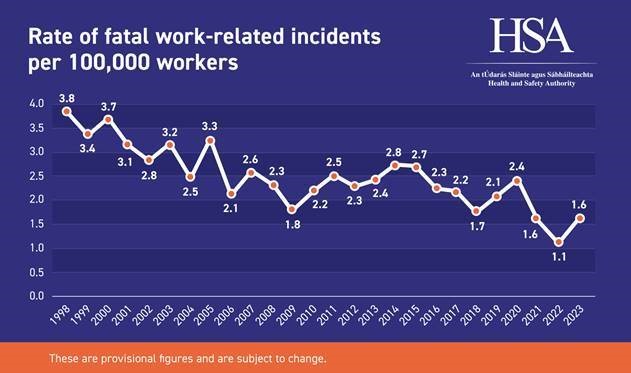
The HSA’s latest data on fatal workplace injuries confirms a major success – in 2024, Ireland recorded its lowest-ever rate of work-related deaths. According to the HSA, the fatality rate per 100,000 workers dropped from 2.7 in 2015 to just 1.2 in 2024.
In total, 33 workers lost their lives in workplace incidents last year – a 23 % drop compared with 2023.
This is cause for cautious optimism.
The reduction suggests that safety protocols, inspections, and awareness efforts across a variety of sectors – especially high-risk ones – are having a real effect. Declines in deaths in both agriculture and construction played a major role in the overall improvement.
The Grim Reality – Agriculture and Construction Still Disproportionately Dangerous
Despite progress, the data paints a sobering picture: workplaces involving farming, construction, vehicles, or heavy machinery remain disproportionately fatal. In 2024:
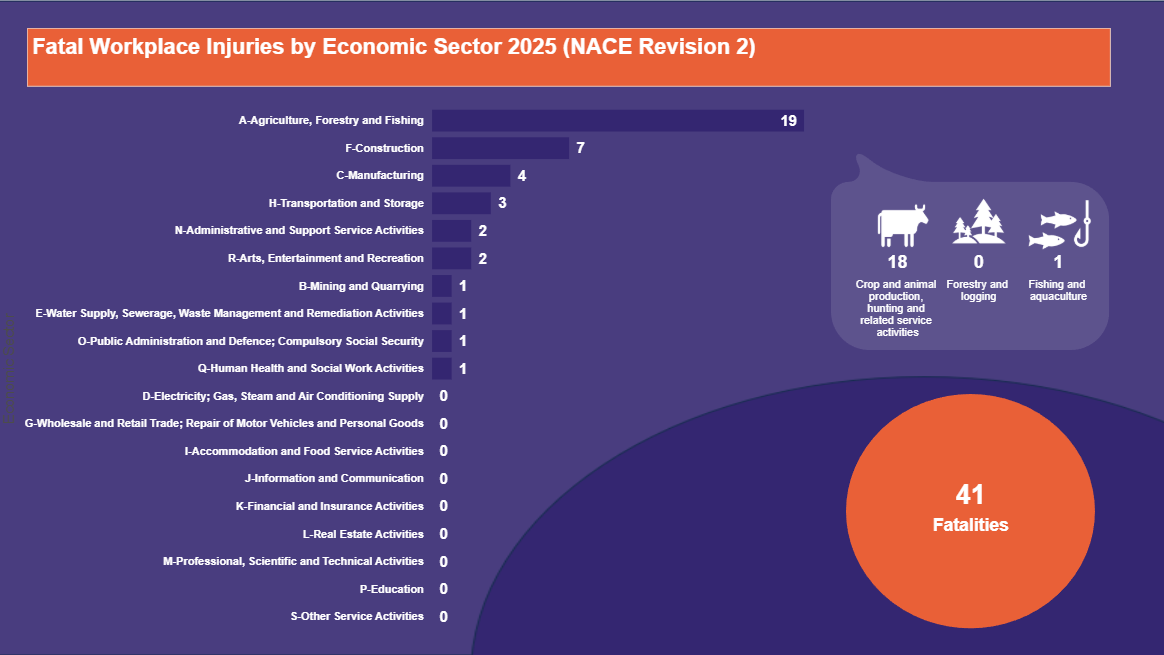
- Agriculture, forestry and fishing recorded 12 fatalities; all were farming incidents – despite agriculture employing just about 4 % of the national workforce.
- Construction fatalities dropped (from 10 in 2023 to 5 in 2024), but the sector remains a major risk.
- The leading causes of death were vehicle-related incidents (10 fatalities), accidents involving heavy or falling objects (6), and falls from height (5). Together these accounted for 64 % of the 2024 total.
- Two-thirds of the victims were aged 55 or older – raising concerns about safety standards for older workers.
So even though the overall numbers are falling, the kinds of work that remain dangerous – farming, construction, working with vehicles or at height. continue to claim lives.
In effect, much of the improvement comes from a statistically small slice of sectors. While that’s still worth celebrating, it isn’t cause for complacency.
What the Trends Tell Us – Progress, But Not Progress for All
Looking at the long-term data (available from the HSA going back to 1998), the downward trend is clear: fatality rates have more than halved over the past two decades.
But that overall success masks persistent risks in certain sectors and demographics. The over-representation of older workers (55+) in fatalities, and the recurring prominence of farming and construction, remind us that progress on paper doesn’t always translate into safe work for everyone.
There are also structural issues: a large share of recent fatalities were among self-employed people, often working alone, perhaps under less oversight than larger employers.
Why This Matters – Beyond the Numbers
Every fatality figure represents a human life lost – a family grief, a community shockwave. The raw data can sometimes feel abstract, but behind each number lies real tragedy.
That’s why the downward trend is important: it shows that regulations, inspections, training, awareness campaigns, can and do save lives.
At the same time, the data underscores that “average improvements” conceal deep risk inequalities. For workers in agriculture or construction – especially older workers, self-employed or working solo – the danger remains acute.
What Needs to Happen Next
- Targeted safety initiatives: Not broad “workplace safety” campaigns but tailored programs for high-risk sectors (farming, construction), especially focused on vehicle safety, working at height, handling heavy objects, and appropriate measures for older workers.
- Support for self-employed workers: Many fatalities happen among self-employed people. Safety training, access to guidance, peer networks — such supports should be more actively extended to sole operators.
- Age-aware safety strategies: With two-thirds of fatalities among workers 55+, ensure workplaces consider age-related risks when planning tasks, training, and supervision.
- Regular transparency and data-driven policies: Continue to publish sector-by-sector data (as the HSA does), so that both government bodies and private employers can see where risks remain and act accordingly.
Source:
Health and Safety Authority — “Fatal Workplace Injuries” page, under topic “Fatal Injury”. See: https://www.hsa.ie/eng/topics/statistics/fatal_injury/